|
 |
Cooperation! Exchange! Communication!
Welcome to
JOERAI
!
(ISSN:
2996-0320) |
 |
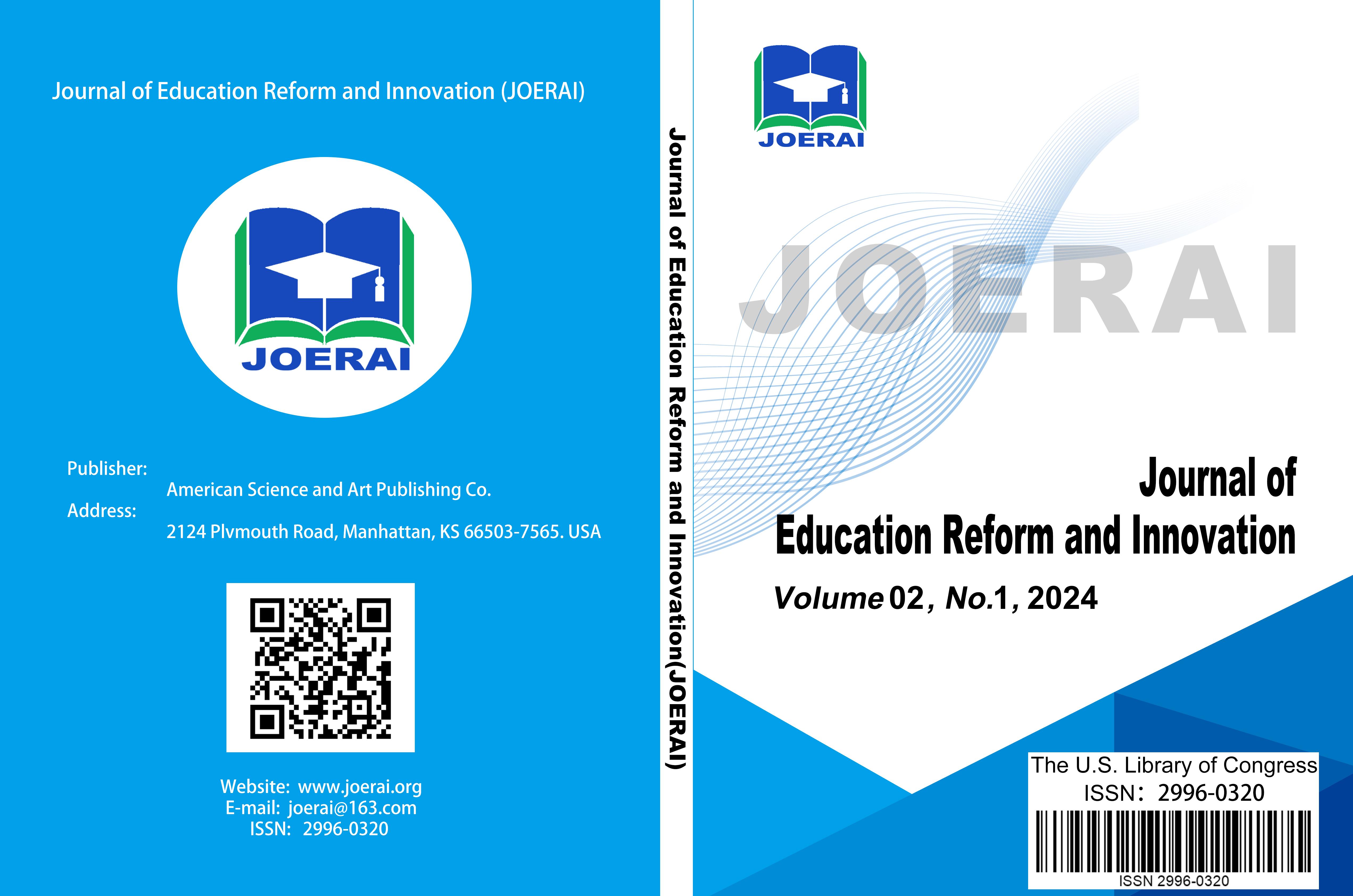
Journal of Education Reform and Innovation
(JOERAI)
Face
Contents
Volume 2, No.1, 2024
Print version
|
DOI:
https://doi.org/10.61957/joerai-20240103 |
|
Title:
Teaching Python the Smart
Way: Strategies for AI-Driven Instruction |
|
Author:
Nouman Hameed1, Fei Xu |
|
Abstract |
|
This paper focuses on
innovative methodologies for teaching Python programming
through AI-enhanced strategies. The intent is to
delineate the techniques and tools that significantly
improve learning outcomes and engagement among students.
Python, renowned for its simplicity and efficacy across
various applications—from web development to data
science—is a critical skill in the digital age. However,
traditional teaching methods often fail to fully engage
students or address diverse learning needs. This paper
introduces an AI-driven instructional framework that
personalizes learning experiences and enhances
understanding through adaptive learning technologies and
intelligent tutoring systems. The research synthesizes
current educational theories with cutting-edge AI
technologies to construct a teaching model that
dynamically adjusts to individual learning paces,
styles, and challenges. Central to our approach is the
use of machine learning algorithms to analyze student
performance data in real-time, thereby allowing for the
customization of teaching materials and assessment
strategies to optimize learning efficiency. This study
conducted a series of experiments involving several
cohorts of students with varying backgrounds in
programming. These experiments were designed to compare
the effectiveness of the AI-driven method against
conventional teaching practices. Results indicate a
significant improvement in students' coding proficiency
and problem-solving skills. Furthermore, feedback
obtained through surveys and direct observations reveals
higher levels of student engagement and satisfaction.
This paper also explores the implications of AI in
educational settings, discussing potential challenges
such as the digital divide and the need for robust
privacy safeguards. It concludes with recommendations
for integrating AI technologies into educational
curricula and proposes areas for further research. By
advancing AI-driven instructional strategies, this
research contributes to the pedagogical field, offering
a scalable and effective model for teaching Python that
promises to equip learners with the skills necessary to
excel in an increasingly technology-oriented world. |
|
Keywords:
Python Programming; AI-Driven Education; Adaptive
Learning; Intelligent Tutoring Systems; Educational
Technology |
Full Document
The
Journal is in the purpose of Cooperation, Exchange and Sharing,
welcome to discuss and cooperation.
|